

Used EVs Are Becoming the Value Play—Yet How Drivers Energize Still Determines the Experience
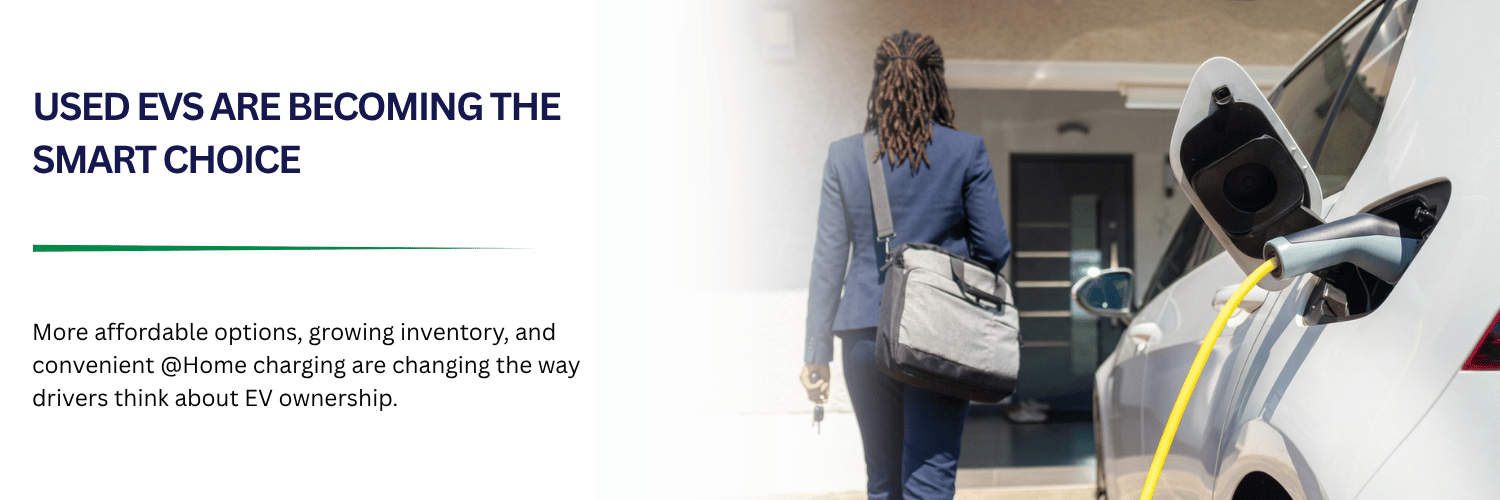
The U.S. EV market enters August with a noticeable change in momentum: pre-owned EVs are increasingly driving market growth. Recurrent reports that used-EV prices have risen 5.1% since January, with the strongest appreciation concentrated among vehicles priced below $40,000. At the same time, as many as 500,000 off-lease EVs could return to the used market during 2026, creating substantially more choice for budget-conscious shoppers.
That combination—greater inventory plus improving resale values—is important for the used EV Buyer. Used EVs are becoming less of an experimental bargain and more of an established vehicle category.
Economics strengthens the story. Kelley Blue Book's latest analysis continues to find that overnight @Home charging is usually the least expensive way to recharge an EV, while public charging generally costs more.
This week's report therefore focuses less on flashy EV launches and more on the decisions that determine whether a used EV actually works in everyday life: purchase price, battery condition, remaining warranty, connector compatibility, utility incentives, charging location, and the home's electrical readiness.
Because fewer than ten strong used-EV-focused U.S. stories were published during August, this edition follows our expanded editorial rule: current-week developments plus the most relevant recent U.S. reporting still influencing used-EV buyers this week.
Top 10 Stories You Should Know About This Week
1. Used-EV Prices Are Rising Instead of Continuing Their Steep Decline
Recurrent's Q3 market analysis found used-EV prices increased 5.1% between January and June when comparing the same make/model/year combinations. The strongest gains occurred at the affordable end of the market: vehicles priced under $20,000 appreciated 9.4%, signaling growing demand for lower-cost EVs.
Source: Used Electric Car Prices & Market Report — Q3 2026
2. A Wave of Off-Lease EVs Is Creating More Choices for Used-EV Buyers
Recurrent projects as many as 500,000 lease-return EVs during 2026, potentially doubling in 2027. More than half of current used-EV inventory is already priced below $30,000, creating a much deeper selection for consumers who previously found EV ownership financially out of reach.
Source: Recurrent Q3 Used-EV Market Report
3. The Fastest-Selling Used EVs Are Moving in About 12 Days
Recurrent reports that the quickest-selling used EV models are leaving dealer inventory in approximately 12 days—nearly four times faster than the average used vehicle. That suggests shoppers who identify the right combination of price, battery health, range and charging capability may have less time to deliberate than they did during the steep-depreciation period.
Source: Used-EV Pricing, Availability and Demand Analysis
4. Used-EV Sales Reach 35,253 Vehicles in June
Cox Automotive's latest market snapshot reports 35,253 used-EV sales during June, while the average digital listing price reached $38,341. Used-EV inventory carried approximately 38 days' supply, providing buyers with meaningful selection even as demand strengthens.
Source: Cox Automotive Market Snapshot
5. Battery Condition Is Becoming Part of the Used-EV Buying Process
Battery intelligence companies such as Recurrent are increasingly giving shoppers access to real-world information including expected range, seasonal range and charging performance. That matters because two EVs of the same model year and mileage can deliver different ownership experiences depending on battery condition, climate exposure and previous charging behavior.
Source: Recurrent EV Battery & Range Insights
6. Battery Warranty Should Be Checked Before Buying a Used EV
Kelley Blue Book recommends verifying exactly how much battery warranty remains before purchasing a used EV. Many mainstream manufacturers originally provided approximately eight years/100,000 miles of battery coverage, but transferability and specific terms vary by manufacturer and model year, making the VIN an important part of pre-purchase research.
Source: 10 Things to Know Before Buying a Used Electric Car
7. @Home Charging Remains the Lowest-Cost Charging Strategy
Kelley Blue Book's July charging-cost analysis concludes that overnight residential charging is generally the least-expensive EV charging option. Public charging remains essential for travel and drivers without dedicated charging, but station fees are typically higher than residential electricity rates.
Source: How Much Does It Cost to Charge an Electric Car?
8. State and Utility Incentives Can Still Reduce EV and @Home Charging Costs
Although federal clean-vehicle purchase credits are no longer generally available for vehicles acquired after September 30, 2025, significant state and utility programs remain. Kelley Blue Book's updated guide identifies incentives ranging from used-EV rebates to Level 2 charger rebates and off-peak electricity discounts—including programs in Maryland and numerous other states.
Source: Electric Car Rebates and Incentives by State
9. Public-Charging Demand Is Growing Faster Than Charger Deployment
ChargePoint data cited by Kelley Blue Book showed charging sessions increasing 34% during 2025, while the number of charging ports increased only 16%. The finding highlights an important distinction for EV buyers: more chargers are being built, but the number of EVs already on the road continues increasing demand for those stations.
Source: EV Charging Demand Outpacing Network Growth
10. Wisconsin Asks EV Owners How They Actually Use Public Charging
Wisconsin DOT continued collecting EV-owner feedback through August 6 about daily driving habits, public-charging preferences and what drivers want to do while their vehicles charge. The initiative reflects a broader transition in charging planning: agencies are increasingly examining the driver experience, not simply the number of chargers installed.
Source: WisDOT Electric Vehicles & Charging Program
The used-EV story has changed.
A year ago, the consumer could reasonably assume that waiting might produce an even cheaper EV. Today, that strategy deserves reconsideration.
Affordable used-EV prices are beginning to strengthen at the same time hundreds of thousands of off-lease vehicles are creating more selection.
That doesn't mean buy now at any price. It means become a better buyer.
Before signing, you should know the battery condition, remaining warranty, realistic range, AC charging capability, DC fast-charging capability, connector type, insurance cost—and exactly where the vehicle will charge when he gets home.
The bargain isn't simply the EV with the lowest sticker price.
The bargain is the EV whose total ownership cost fits your life.
Bought a used EV? Still planning your week around public charging? Looking for a practical way to make EV ownership easier?
The StayReady @Home Charging Package by Dai Technologies Corporation helps DMV homeowners transition to convenient overnight EV charging with certified installation, permitting support, and turnkey guidance designed around real life.
Because the best EV experience starts where you live.

Have questions? DaiTechCorp is here to help.
We’re certified, licensed, and code-smart. Let’s build your EV future the right way.
Connect with us www.linktr.ee/daitechcorpinfo